
If you’ve spent a Saturday afternoon waxing your car only to watch the shine fade within a few weeks, you’ve probably started asking: is there a better way?
The debate around ceramic coating vs wax is one that every car owner eventually runs into — and for good reason. Both promise a glossy, protected finish, but how they work, how long they last, and what they cost are worlds apart.
This guide breaks down the honest, fact-based differences so you can make the right call for your vehicle, your budget, and your lifestyle.
What Is Car Wax?
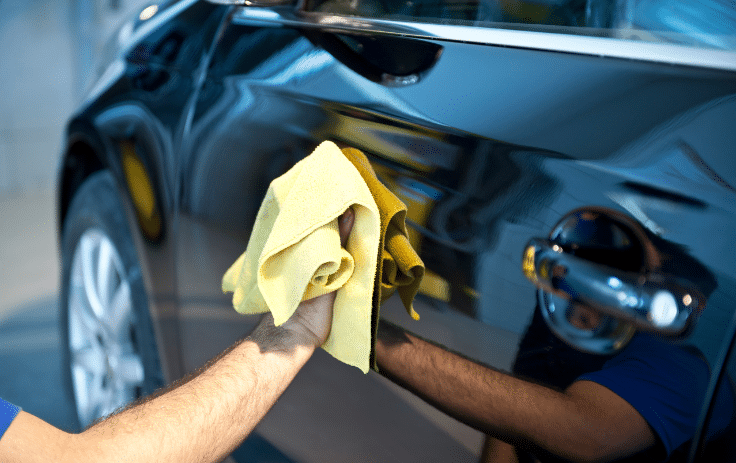
Car wax has been a staple of automotive care for decades. Most traditional waxes are derived from carnauba — a natural substance sourced from the leaves of the carnauba palm — sometimes blended with synthetic polymers to improve staying power.
Wax works by sitting on top of your paint as a sacrificial layer, absorbing environmental damage so your clear coat doesn’t have to. It’s easy to apply, affordable, and delivers a beautiful warm glow that many enthusiasts genuinely love.
Types of car wax:
- Carnauba wax – natural, rich shine, shorter lifespan
- Synthetic wax (paint sealant) – longer protection, up to 4–6 months
- Spray wax – easiest to apply, fades quickest
- Liquid/paste wax – better coverage, ideal for regular maintenance
Pros of wax:
- Budget-friendly (premium carnauba wax typically costs $20–$50 per application)
- Beginner-friendly DIY application (1–2 hours)
- Delivers an instant, deep, mirror-like finish
- Widely available
Cons of wax:
- Wears off quickly — typically within 4–8 weeks under normal conditions, or sooner in heat, rain, or harsh weather
- Does not chemically bond with paint
- Offers limited defense against bird droppings, acid rain, and chemical contaminants
- High temperatures can cause wax to melt and reduce effectiveness
What Is Ceramic Coating?
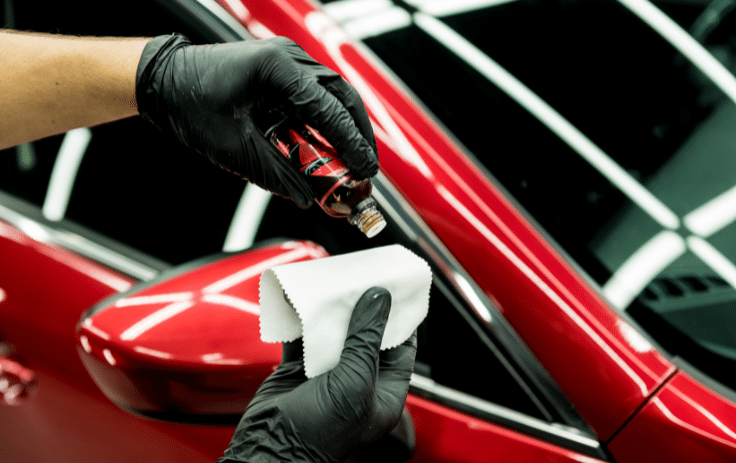
Ceramic coating is a more recent advancement in paint protection technology. It is a liquid polymer — typically made from silicon dioxide (SiO₂) or similar compounds — that chemically bonds with your vehicle’s clear coat when applied. Once it cures, it forms a hard, transparent, glass-like layer that becomes part of the paint surface rather than simply resting on top of it.
This bonding process is what sets ceramic coating fundamentally apart from wax. It doesn’t wash off, doesn’t melt in heat, and doesn’t need to be reapplied every few weeks.
Pros of ceramic coating:
- Long-lasting protection (typically 2–5 years; some professional-grade products last even longer)
- Strong hydrophobic properties — water, dirt, and grime bead up and slide off easily
- Excellent resistance to UV rays, bird droppings, acid rain, road salt, and tree sap
- Harder surface (rated at 9H hardness, compared to 3–4H for standard automotive paint)
- Reduces long-term maintenance time and cost
- Enhances gloss with a consistent, deep “wet” shine
Cons of ceramic coating:
- Significantly higher upfront cost — DIY kits run $40–$150, while professional application can range from $1,000–$3,000
- Requires extensive preparation: thorough washing, decontamination, and often paint correction before application
- The full process can take 6–8 hours or more
- Mistakes during application (streaks, high spots) can be difficult to correct
- Should not be applied over existing wax, as it prevents proper chemical bonding
Ceramic Coating vs Wax: Head-to-Head Comparison
1. Durability
This is where the gap is most dramatic. Traditional car wax typically lasts around 2 to 4 months under normal driving conditions — and potentially as little as 4–6 weeks if you park outdoors, live somewhere hot, or wash your car frequently. Exposure to heat, rain, and frequent washing all accelerate how quickly the wax breaks down.
Ceramic coatings, by contrast, bond chemically with the paint and resist wear across seasons, washes, and weather changes. Professional-grade coatings are generally reported to last anywhere from 2 to 5 years, with some high-end formulations lasting even longer with proper maintenance.
Verdict: Ceramic coating wins decisively on durability.
2. UV Protection
Sun damage is one of the leading causes of paint fading and oxidation over time. Independent testing indicates ceramic coatings block approximately 90–95% of UV radiation, compared to roughly 50% for car wax. Some controlled tests have reported even higher UV blocking performance from premium ceramic formulations.
This matters especially for car owners in sunny, high-UV climates — paint fading and chalky oxidation are significantly reduced with a ceramic coating compared to regular waxing.
Verdict: Ceramic coating offers substantially better UV protection.
3. Protection Against Contaminants
Wax provides a basic barrier against light contamination, but its soft, sacrificial nature means it offers limited defense against harsher threats. Bird droppings, acid rain, tree sap, and road salt can still etch into or through a wax layer, especially once the wax has partially worn away.
Ceramic coatings create a chemically resistant, hard surface. Industry testing shows ceramic coatings maintain strong resistance against bird droppings, tree sap, acid rain, road salt, and harsh detergents that wax struggles to repel. That said, even ceramic coatings aren’t invincible — contaminants left sitting for extended periods can still cause damage and should be removed promptly.
Verdict: Ceramic coating offers meaningfully stronger protection against environmental contaminants.
4. Scratch Resistance
Neither wax nor ceramic coating will prevent rock chips or deep scratches from physical impact. However, ceramic coating does offer some defense against light swirl marks, minor abrasions, and surface-level contact damage due to its hardness. Some advanced professional formulations — such as self-healing coatings — can even repair minor scratches when exposed to heat.
Wax, being a soft, sacrificial layer, provides minimal resistance to scratching.
Verdict: Ceramic coating has the edge, though neither is a true scratch shield.
5. Ease of Application
Wax is genuinely beginner-friendly. You clean the car, apply wax with an applicator pad, let it haze (about 5–10 minutes), and buff it off with a microfiber cloth. Most people complete a full wax job in 1–2 hours.
Ceramic coating requires significantly more preparation and skill. The paint surface must be thoroughly washed, decontaminated, and often polished to remove imperfections before application. The coating itself must be applied in thin, even layers and begins bonding almost immediately — leaving little room for error. The full process typically takes 6–8 hours or more, and improper application can result in uneven coverage or streaks that are difficult to fix.
Verdict: Wax wins for ease of application and DIY accessibility.
6. Maintenance After Application
Once ceramic coating is applied and cured, ongoing maintenance is minimal. A ceramic coating maintenance spray every 3–6 months helps refresh its hydrophobic properties. Regular washing is simplified because dirt and water don’t cling to the surface the same way.
Waxed cars require more frequent attention — reapplication every 2–4 months — and more careful washing to avoid stripping the protective layer prematurely.
Verdict: Ceramic coating requires less ongoing maintenance.
7. Cost
Wax is significantly cheaper upfront. High-quality carnauba waxes generally cost in the range of $20–$50 per application, making it accessible for most car owners.
Ceramic coating carries a higher initial investment. DIY application kits typically run $40–$150, while professional installation — which includes paint correction and expert application — can average $1,000–$3,000 depending on the vehicle size, condition, and coating grade. However, when you factor in that ceramic coating eliminates the need for repeated waxing over several years, the long-term cost difference narrows considerably. Over a five-year ownership period, a ceramic-coated vehicle may require significantly fewer maintenance hours and fewer product purchases.
Additionally, well-maintained paint protected by a ceramic coating is generally associated with stronger resale value — preserved condition and documented protection history are appealing to buyers and can justify premium pricing.
Verdict: Wax wins on upfront cost; ceramic coating can offer better long-term value.
Quick Comparison Table
| Factor | Car Wax | Ceramic Coating |
| Lifespan | 4–8 weeks (up to 6 months for synthetic) | 2–5+ years |
| UV Protection | ~50% | ~90–95% |
| Bonding Method | Sits on surface | Chemically bonds with clear coat |
| Scratch Resistance | Minimal | Moderate (9H hardness) |
| Application Difficulty | Easy (1–2 hrs) | Advanced (6–8+ hrs) |
| Upfront Cost | $20–$50 | $40–$150 (DIY) / $1,000–$3,000 (pro) |
| Maintenance Frequency | Every 2–4 months | Minimal; refresh spray every 3–6 months |
| Hydrophobic Effect | Moderate | Strong |
So, Which One Should You Choose?
There’s no universally correct answer — it genuinely depends on your situation.
Choose wax if:
- You’re on a tight budget
- You enjoy hands-on detailing as a hobby
- Your car is garage-kept or only driven occasionally
- You want a quick, accessible way to boost your car’s shine before a show or event
Choose ceramic coating if:
- You want long-term, low-maintenance protection
- Your car is exposed daily to UV rays, harsh weather, road salt, or environmental contaminants
- You’re willing to invest upfront for fewer headaches down the line
- Preserving your car’s paint condition and resale value matters to you
Some car owners even use both — applying a wax or sealant booster on top of a maintained ceramic coating to enhance gloss further. Note, however, that you cannot apply ceramic coating over wax, as the wax prevents proper chemical bonding with the paint.
Final Thoughts
The ceramic coating vs wax debate isn’t really about which one is “better” in absolute terms — it’s about which one is better for you. Wax remains a perfectly valid, time-tested option for casual use. Ceramic coating is a serious long-term investment that pays off in durability, protection, and reduced upkeep for drivers who want to preserve their vehicle at a higher level.
Whatever you choose, consistent care — whether that means a fresh coat of wax every couple of months or a well-maintained ceramic coating — is what ultimately keeps your car looking its best.
Ready to Get Your Car Ceramic Coated?
If you’re looking for a ceramic coating you can trust, we’ve got you covered. Archer’s Mobile Detailing offers professional ceramic coating services to keep your car protected and looking great all year round.
Call us at (254) 500-2468 or book online to get started. We serve Leander, Cedar Park, Georgetown, Liberty Hill, Round Rock, Lago Vista, and Austin.
